

Designing hospitality fitouts for change, not disposal
White Paper | July 2026
About the white paper ‘Sustainability in Airport Retail Fitouts’
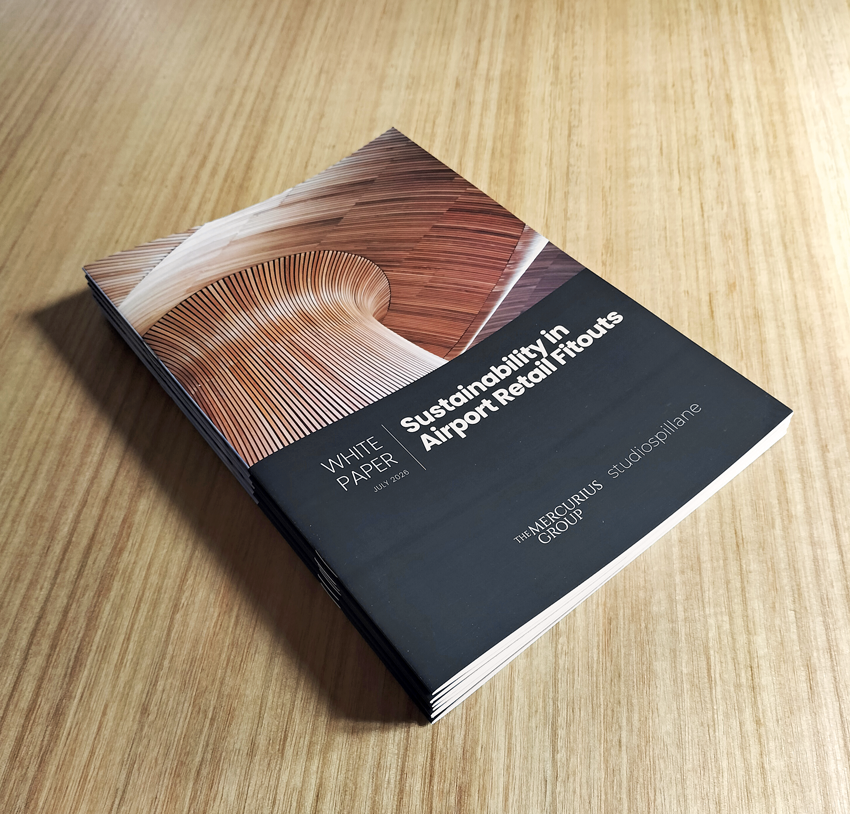
Hospitality environments are designed to evolve.
Concepts change. Brands refresh. Operators move. Customer expectations shift. Restaurants, cafés, bars and lounges are regularly renewed to remain relevant, operationally effective and commercially competitive.
The challenge is not that these spaces change. It is that each change can trigger another cycle of demolition, disposal and replacement.
This issue is especially visible in airport hospitality, where tenancy changes occur within complex commercial, operational, security and servicing environments. But it is not limited to aviation. The same questions apply across restaurants, cafés, hotels, clubs, food halls and other high-churn hospitality settings.
How can we continue to renew hospitality environments without treating every new commercial cycle as a reason to start again?
That question is at the centre of the new white paper Sustainability in Airport Retail Fitouts.
The paper brought together The Mercurius Group, studiospillane, Brisbane Airport, SSP and WT because the issue extends across the whole fitout system. It cannot be resolved by a designer, operator, landlord or cost planner acting alone.
The white paper was launched at the Airport Retail and Commercial Forum 2026 in Cairns, where the findings were presented and then explored through a panel discussion bringing together airport leasing, hospitality operations, cost planning and design.
The discussion continued well beyond the session, reinforcing both the complexity of the issue and the industry’s appetite for more practical ways forward.
Fitout churn is the hidden issue
The environmental impact of hospitality fitouts is often less visible than the finished spaces they create. Customers experience the new venue. They rarely see the walls, ceilings, flooring, joinery, furniture and equipment that were removed to make way for it.
Many of those elements may still be functional. Their commercial life has ended because the lease, operator or concept has changed, even though their material life may have many years remaining. The issue is therefore not one fitout. It is the repeated cycle of fitout, defit, disposal and refit across many sites and lease periods.
Airports provide a particularly useful setting in which to examine this problem. Their hospitality venues must withstand high use, respond to strict operational and hygiene requirements, support complex services and remain commercially relevant to a changing passenger market.
These requirements make airport food and beverage fitouts a difficult but valuable test case for more sustainable design.
What the analysis found
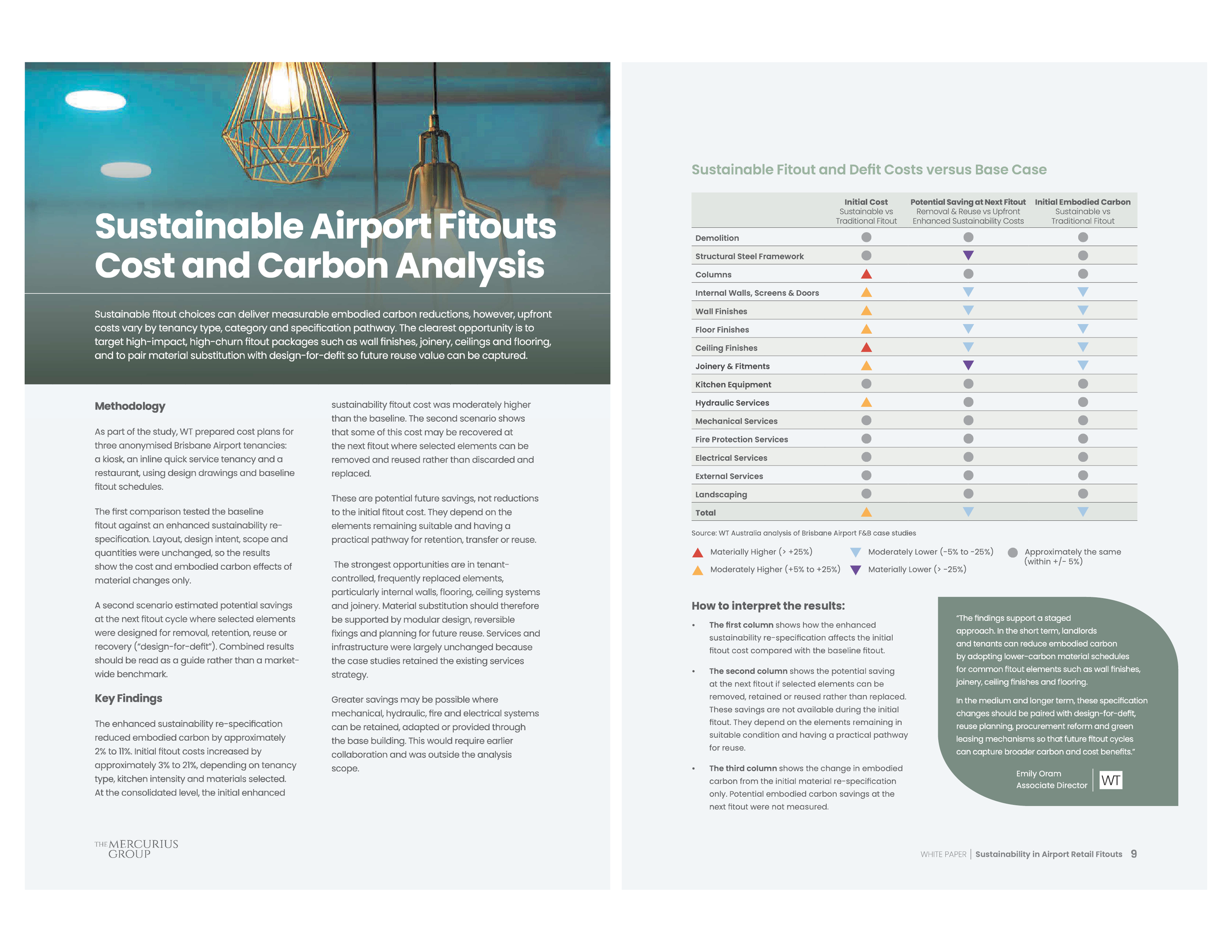
As part of the white paper, WT prepared cost and embodied-carbon comparisons for three anonymised Brisbane Airport food and beverage tenancies: a kiosk, an inline quick-service tenancy and a restaurant.
The existing layouts, quantities, functional scope and design intent were retained. The first comparison tested what would happen if the conventional material schedules were replaced with enhanced sustainability specifications.
The analysis found that better material choices could achieve measurable reductions in initial embodied carbon. It also confirmed that the upfront cost impact varied considerably depending on tenancy type, scale, kitchen intensity and the particular materials selected.
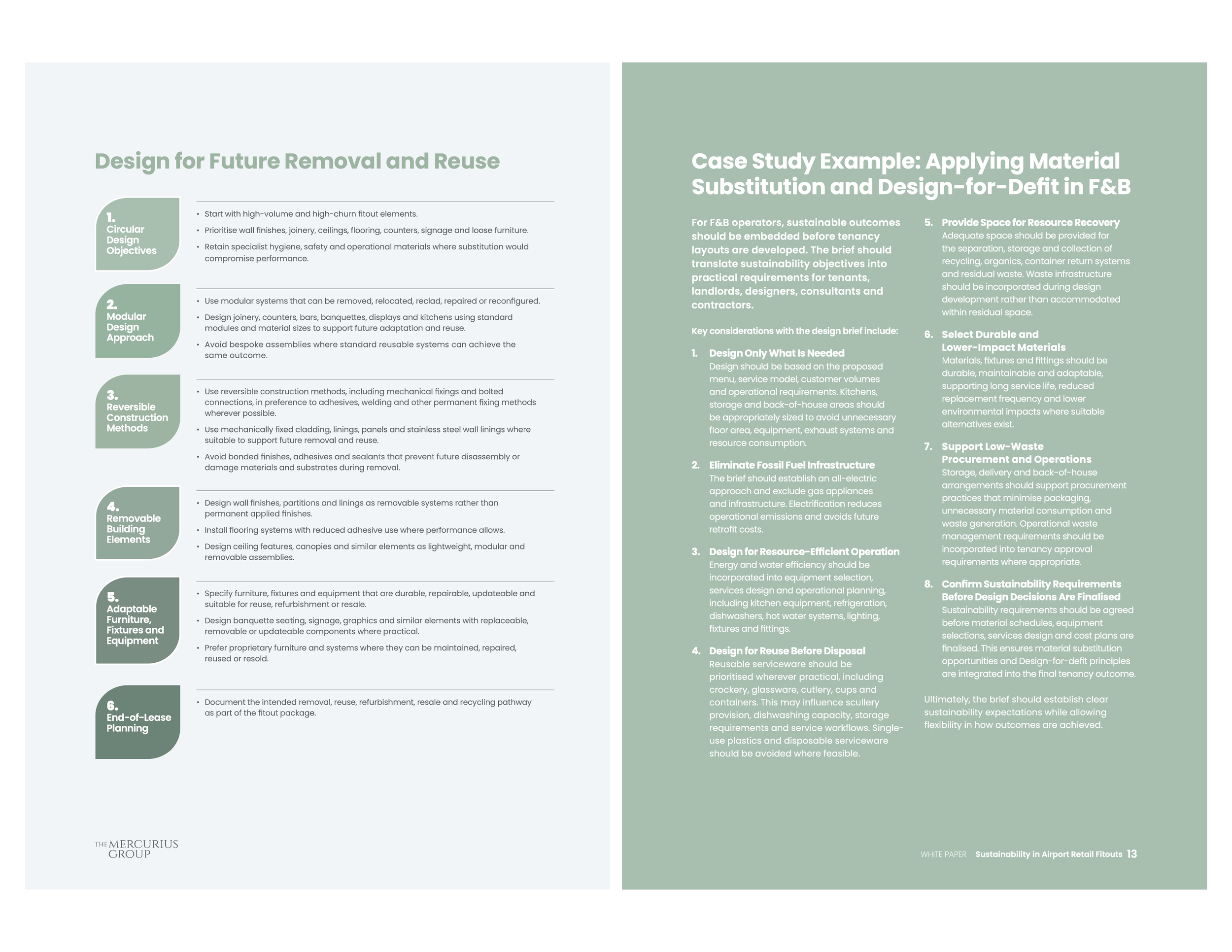
The second scenario considered the next fitout cycle. It explored the potential value of designing selected elements so they could be removed, retained or reused rather than demolished and replaced.
The findings were directional rather than a universal market benchmark. However, they reinforced an important distinction: material selection can reduce carbon now, while circular design begins to change the longer-term cost and resource equation.
Better materials are only the beginning
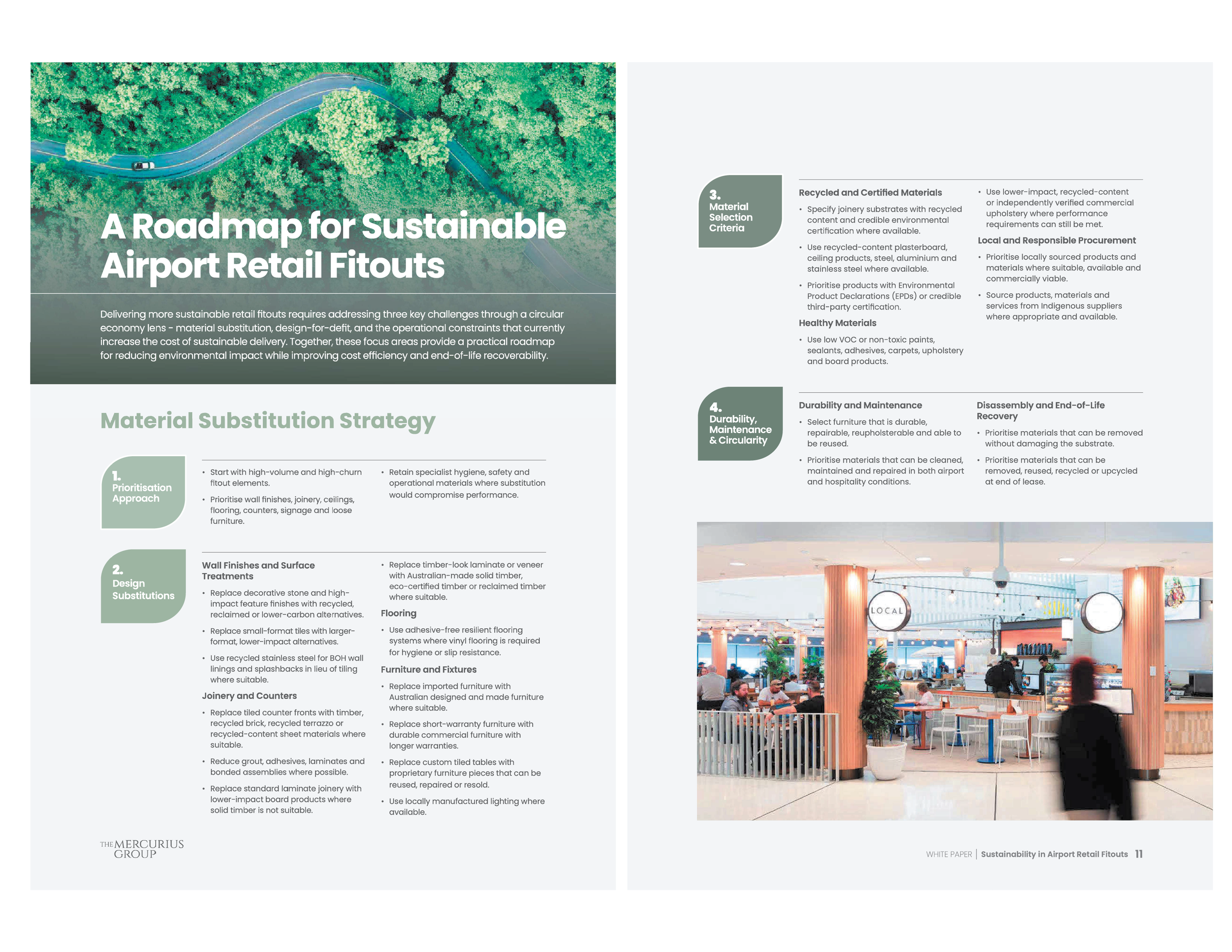
More sustainable material selection remains important.
The strongest opportunities were generally found in frequently replaced, tenant-controlled elements such as internal walls, wall finishes, flooring, ceilings, joinery, counters and furniture.
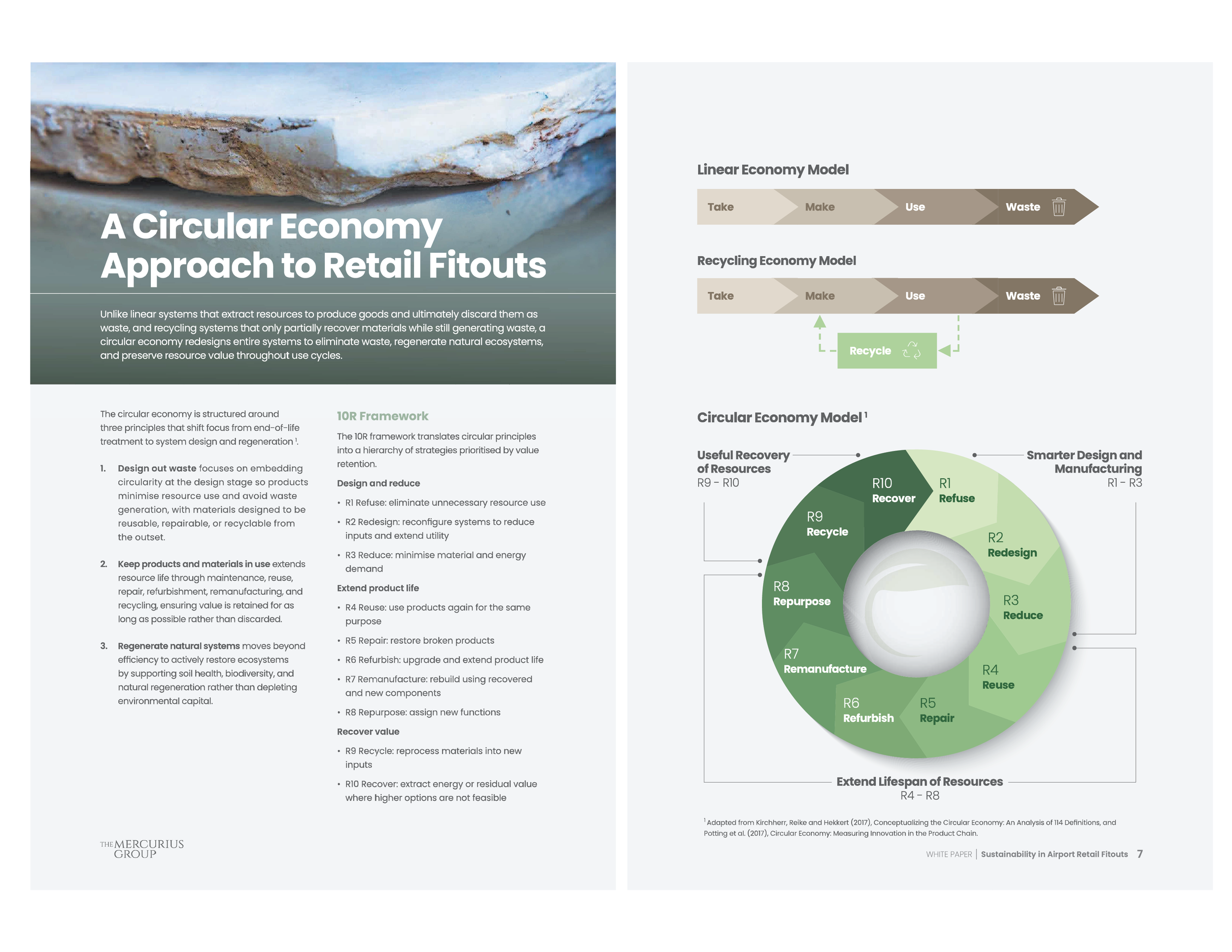
But replacing one material with another is only part of the response. A lower-carbon counter that is permanently bonded together may still be destroyed at the end of the lease. A durable wall lining may still go to landfill if there is no way to remove it intact. Recyclable materials may never be recycled if they are mixed, contaminated or damaged during demolition.
Circular design asks different questions at the beginning of the project:
What can remain?
What can be repaired or refreshed?
Can existing joinery be reclad rather than replaced?
Can furniture be reupholstered?
Can new elements be mechanically fixed rather than permanently bonded?
Can counters, wall panels and ceiling features be designed as modular components that can be repaired, relocated or reused?
The simplest expression is often: screw rather than glue.
This does not mean compromising hygiene, waterproofing, fire performance, durability or operational requirements. It means choosing reversible methods where performance allows, so materials have a greater chance of retaining value beyond the current fitout.
The infrastructure opportunity
Hospitality fitouts are not only made up of finishes and furniture.
Kitchens, exhaust systems, hydraulic services, mechanical systems, fire services and electrical infrastructure can represent some of the most expensive and resource-intensive parts of a venue.
The case-study modelling largely retained the existing services strategy, so it did not quantify the wider potential value of retaining this infrastructure between operators.
That remains an important opportunity.
If kitchen zones and major service connections can be planned for adaptation rather than complete removal, future operators may avoid rebuilding significant parts of a tenancy from scratch.
This requires decisions beyond the design of an individual venue. It involves landlord infrastructure, tenancy planning, leasing, ownership, maintenance and the timing of outgoing and incoming operators.
Relevance across hospitality
Although the white paper focuses on airport retail and food and beverage tenancies, its principles have wider application.
Hotels regularly refresh restaurants, bars, guestrooms and public areas.
Clubs update dining offers to respond to changing membership and customer expectations.
Restaurants and cafés change hands, rebrand or adapt their concepts.
Food halls and mixed-use developments regularly replace operators while retaining the underlying building.
Across all of these environments, the same opportunity exists: separate the life of the commercial concept from the life of the materials and infrastructure used to create it.
A change in brand does not always require a complete change in flooring. A new operator does not necessarily require a new kitchen layout. A refreshed customer experience does not have to begin with demolition.
Decisions need to move earlier
Circular outcomes are not determined when the defit contractor arrives. By then, most of the important decisions have already been made.
The brief establishes what must be achieved and what should be retained.
The lease clarifies ownership and end-of-lease responsibilities.
The design determines how much is built and whether it can be adapted later.
The cost plan needs to recognise both upfront expenditure and the value otherwise lost through demolition.
Construction needs to preserve the intended modularity and reversible fixing methods.
Operations, maintenance and repair influence whether elements remain suitable for future reuse.
Before the lease ends, outgoing and incoming parties need time to assess what can remain, transfer or be recovered.
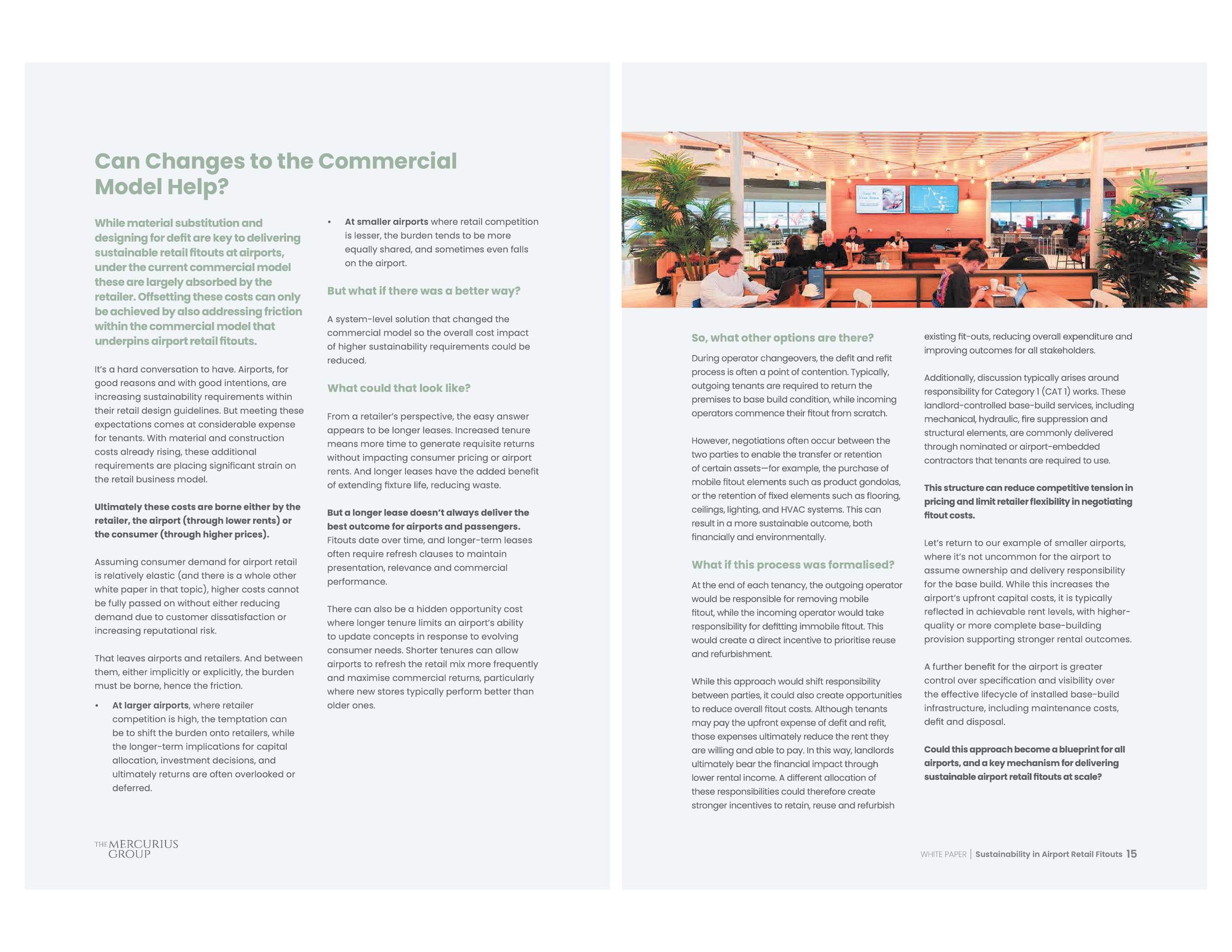
This requires a shared approach between landlords, operators, designers, consultants, contractors and cost planners. It also requires a more considered conversation about who carries the upfront cost and who receives the future value.
Circular fitouts remain an emerging area of practice. Some current premiums may reduce as designers, contractors and suppliers become more familiar with the methods, and as supply chains and reuse pathways mature.
The goal is not to stop hospitality environments from changing. It is to make each change less wasteful.
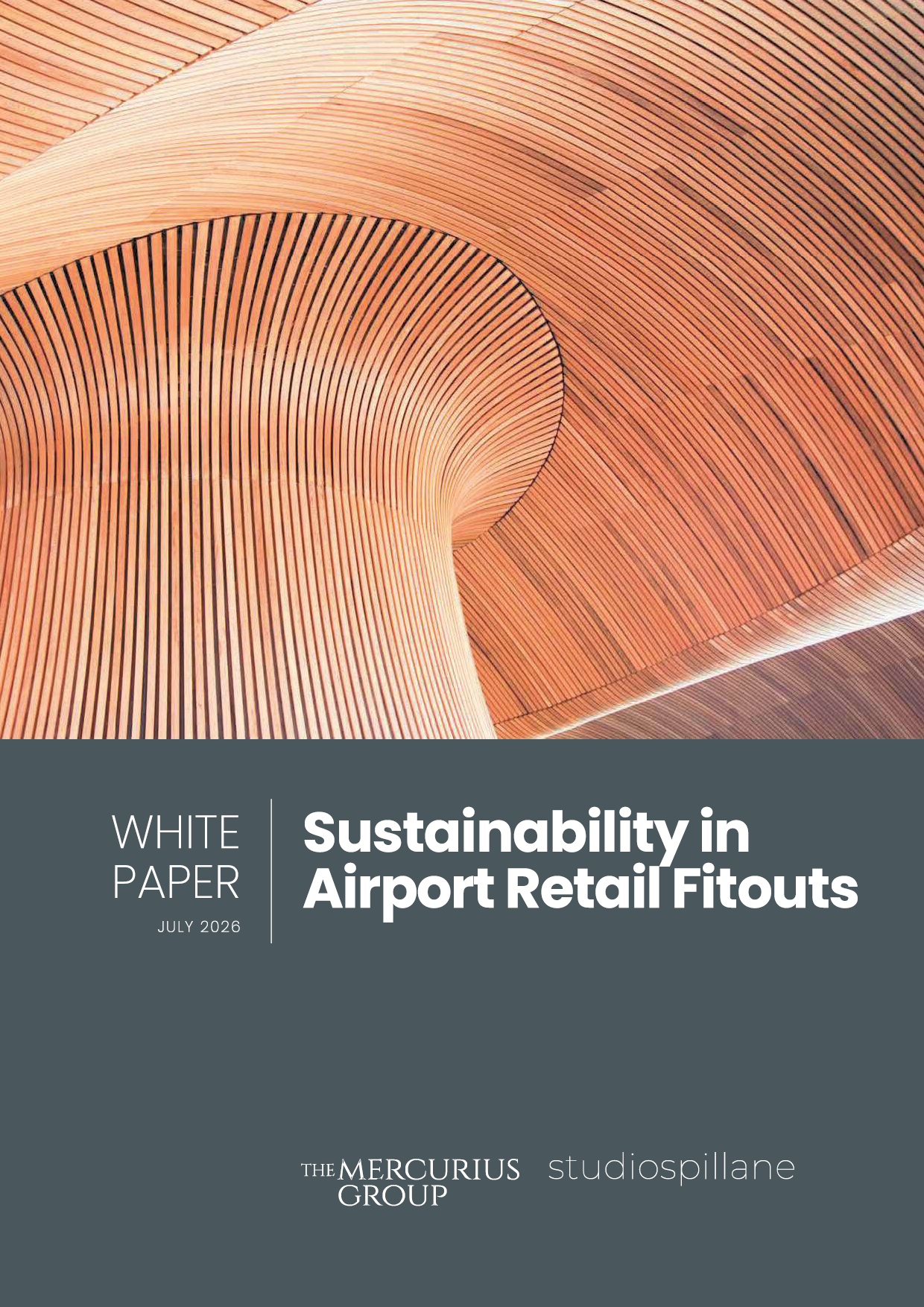
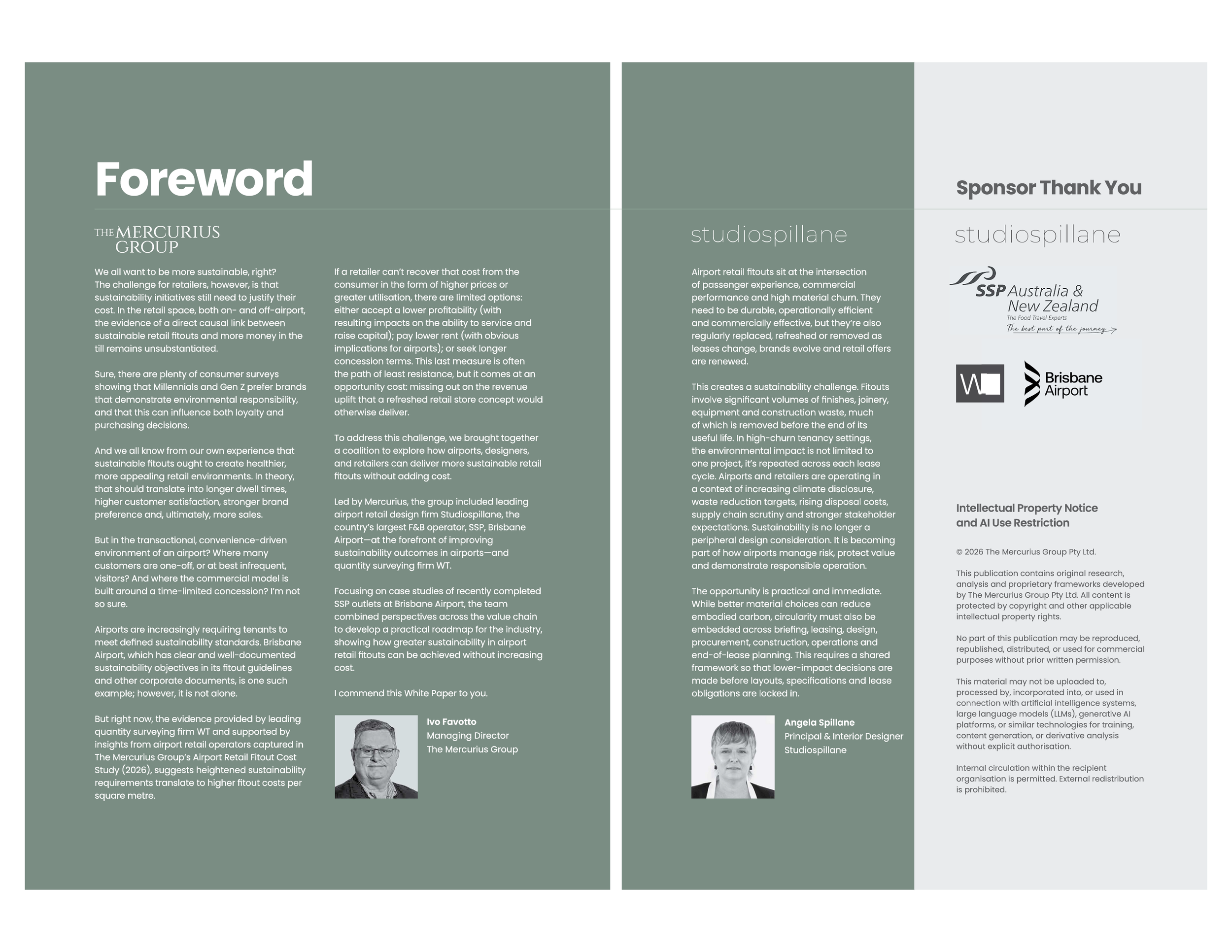
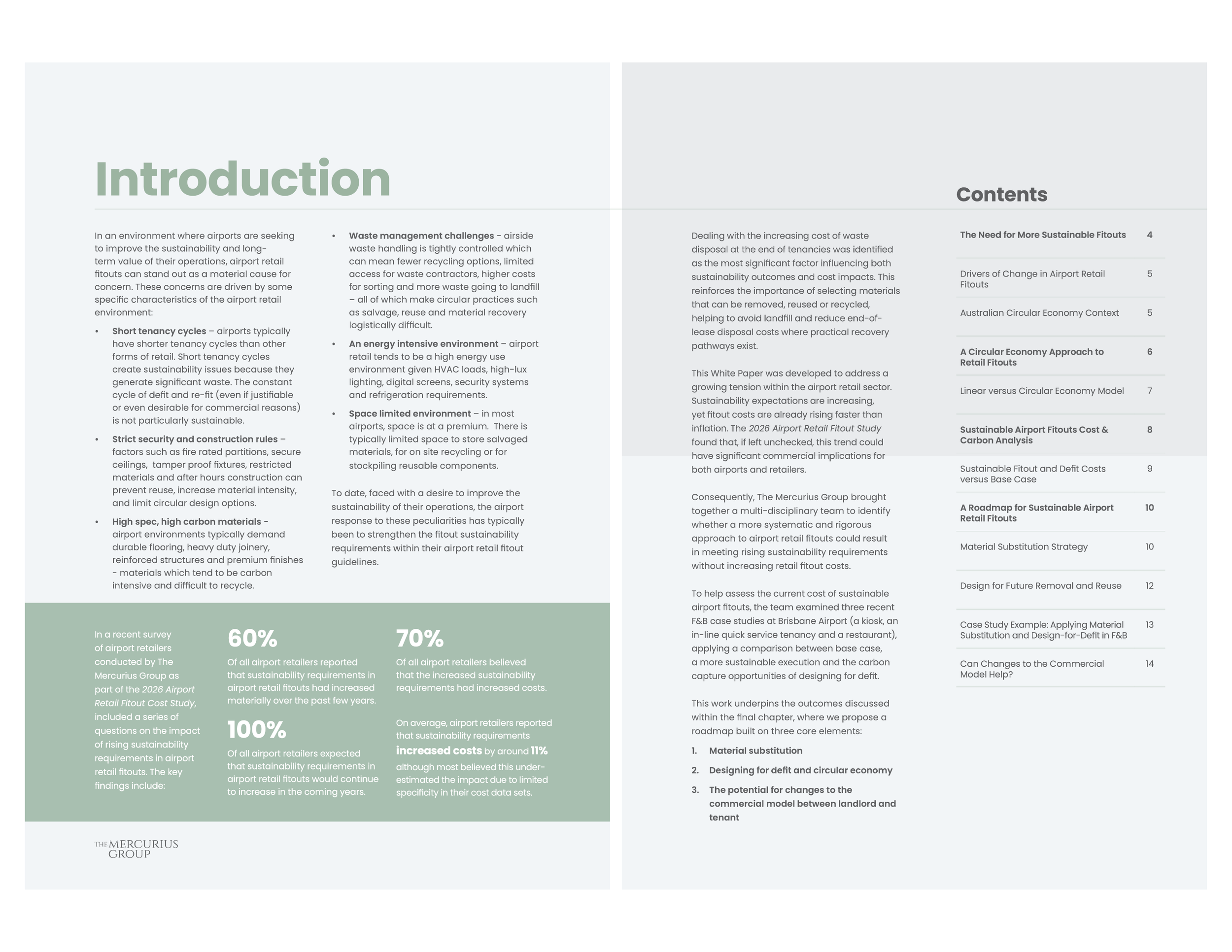
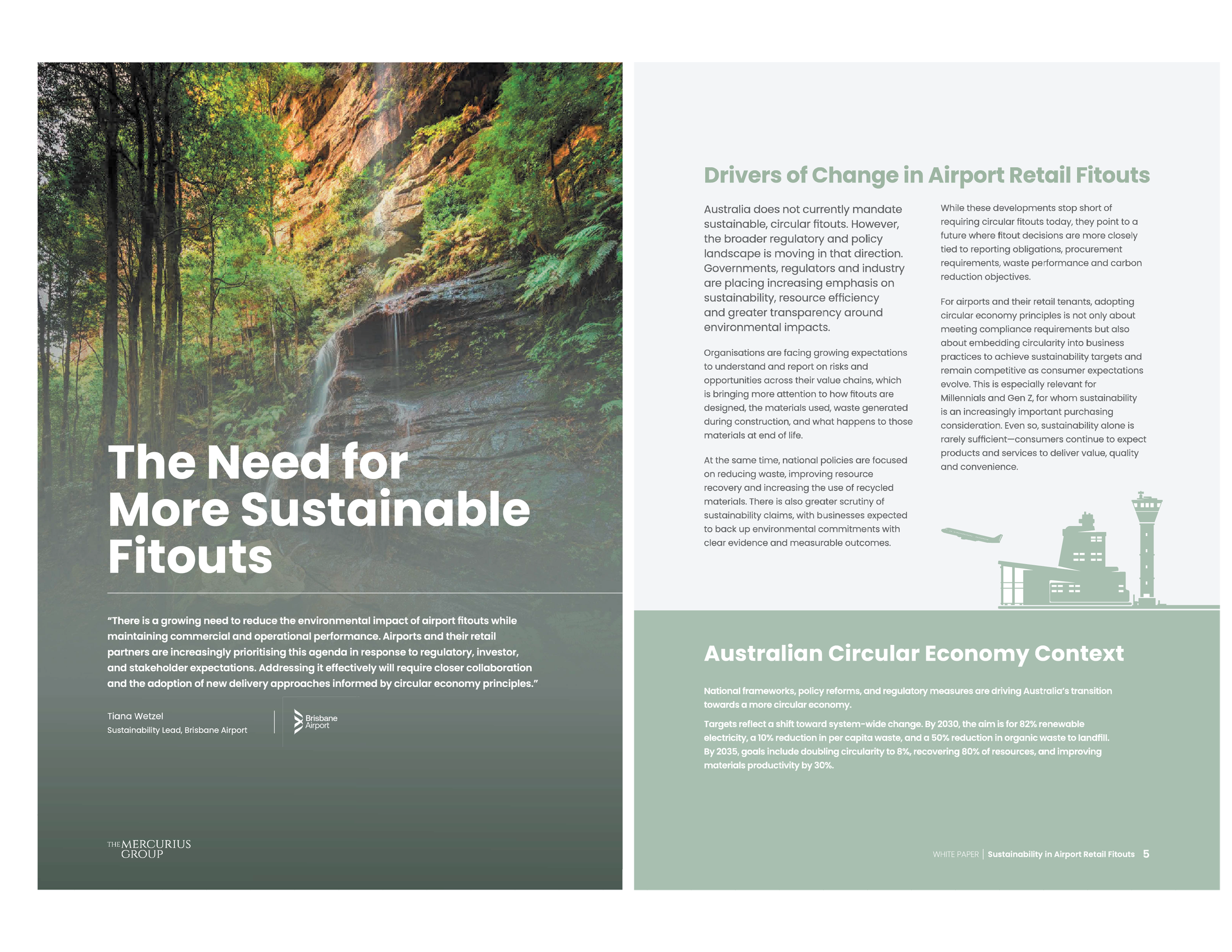
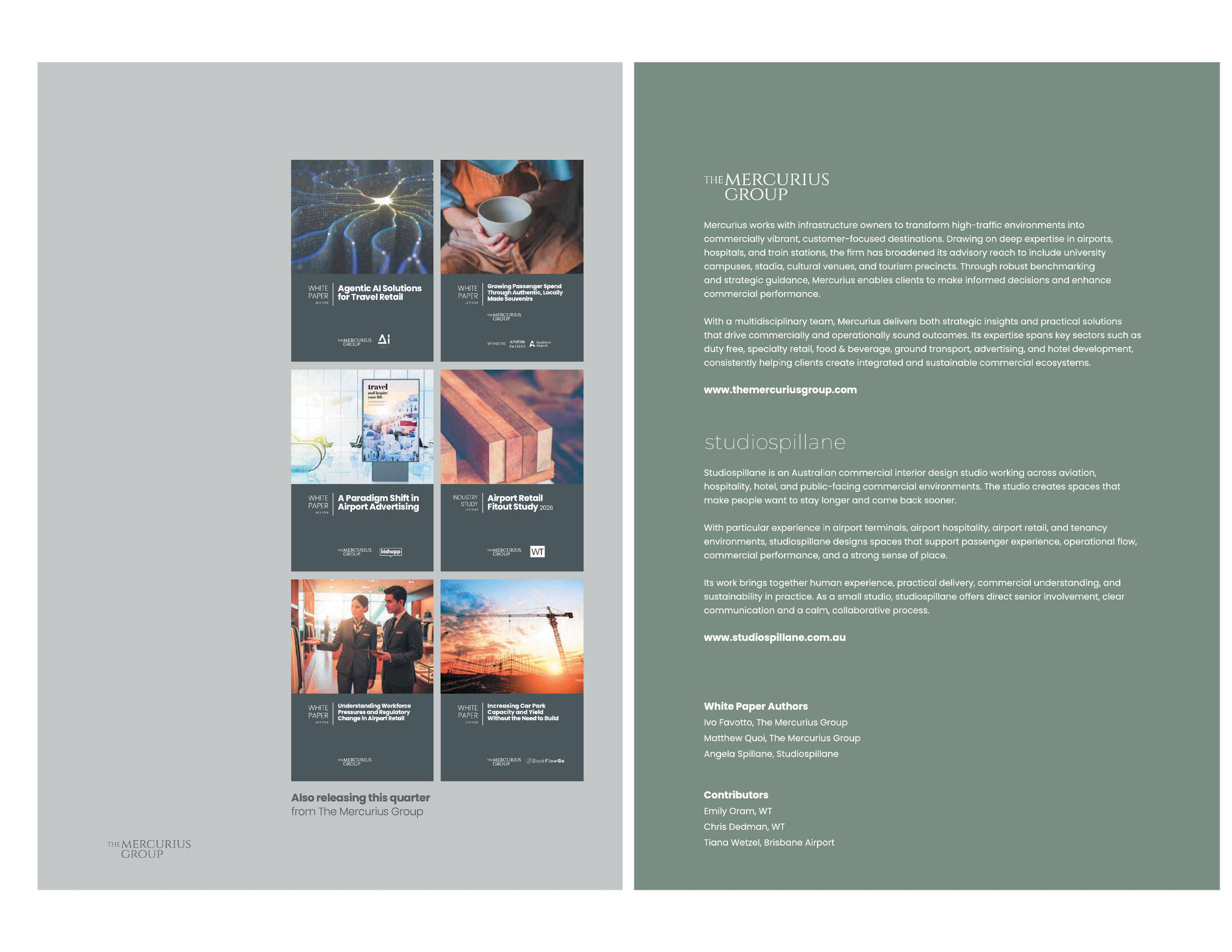
Download Sustainability in Airport Retail Fitouts.
To discuss how these principles could be applied to an airport, hospitality or hotel project, contact studiospillane.
The white paper was developed in collaboration with:
The Mercurius Group, Brisbane Airport, SSP, and WT.
We welcome continued industry discussion about the practical, commercial and operational changes needed to make circular hospitality fitouts more achievable. The presentation and panel confirmed that this is a conversation the industry is ready to continue.